

I try to avoid talking politics on here. I’m not the least bit qualified considering my age and current occupation. However, the recent US election this November 5th has sent shockwaves throughout the nation, and I almost feel obligated to speak on it while trying to be as impartial as I can.
I’ve no contempt for anyone who voted for a particular side, though I may have choice opinions for those in the most extremist wings, yet this is an election where the effects of the presidency and mood of the nation could be felt at home. The price of eggs and gas, a border crisis, reproductive rights on the ballot; the country is at an impasse of wills.
I’ve seen good-hearted folks on the right align themselves with a very maligned cult-of-personality for the sake of rescuing the economy. I’ve seen old school libs clam up and progressives go full Marxist. It’s very unclear to me what the cultural zeitgeist in America looks like right now, but I do encourage those who are anxious about these current times to not despair. There is still much work left to be done from both sides.
I’m not here to discuss why Donald Trump won the 2024 presidency or why Kamala Harris lost it (though it does seem like some critical blunders were made) but for someone who operates in the publishing world, there is a looming despair regarding literature in the United States. This is largely in regard to the book banning that has been happening dating back to 2021.
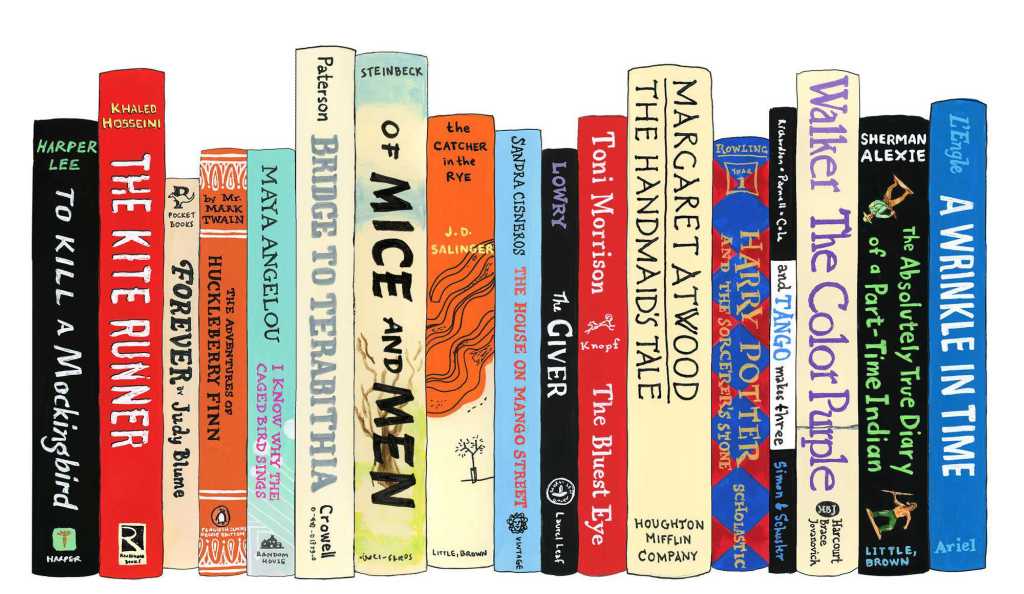
This isn’t the first time books have been banned in the country, and unfortunately it may not be the last, but the reason for my bringing this up is that these banned books, which have been aimed at specific works that deal in race, gender, and identity, are restricted access from public schools and libraries, and limit what children are able to learn about the country and our shared history.
This book banning is largely advocated by conservative pressure groups that challenge traditional understandings of American history and traditional values that have, over time, become more progressive. The American Library Association reported almost 1,600 books have been challenged since 2021.
A large factor in these bans are the complaints of parents themselves, regarding certain books as obscene or harmful for children. For instance, a concerned Virginia mother, Yael Levin-Sheldon claimed that a book titled The Black Friend: On Being a Better White Person was itself a racist title and did not belong in a public school.
I should note that these bans are not only being suggested by the right, but by the left as well. But the trend in the recent banned works is well-aligned with the values held by certain religious and right-wing groups.
Notable books that have been challenged:
- Maus by Art Spiegelman
- Beloved by Toni Morrison
- Thirteen Reasons Why by Jay Asher
- Fifty Shades of Grey by E. L. James
- Looking for Alaska by John Green
- A Brave New World by Aldous Huxley
- A Court of Thorns and Roses by Sarah J. Maas
- The Hate U Give by Angie Thomas
- The Handmaid’s Tale by Margaret Atwood
- The Kite Runner by Khaled Hosseini
These books certainly contain controversial elements, and to be completely honest I don’t even like some of these titles (looking at you Fifty Shades), but I will never advocate for a book to be banned so long as there’s still breath in my lungs. I will always find it innately undemocratic and, frankly, ignorant.
The total conservative victory of this election (the Republican party now holding majority power in all three branches) and the resurgence of Christian nationalism has now cleared the path for book banning to not only continue, but challenge even more books in the coming years and restricting the access of books to children. This is in addition to the red wave that’s occurred in Europe over the last decade (or at the very least, since Merkel left office in Germany).
As a Pennsylvania resident, my state was a major decider to who will win the election, a swing state battleground that went blue for Obama, red for Trump, blue for Biden, and then red for Trump again in the last four election cycles. Democratic Senator Bob Casey, who’s been a PA senator since I was 9 years old, is losing ground in the state as I write this, to paint a picture as to just how massive of a win last night was for the grand old party.
Not that I ever place much stock in elected politicians; men in power will do things that men in power do.
“He was born to be a senator. He never said anything important, and he always said it sonorously.”
– Sinclair Lewis in Elmer Gantry
Nevertheless, anytime there’s a shift in power like this, there can be some uneasiness and anxiety in the years to come. There are checks and balances for a reason, but I have the eerie feeling this government is growing increasingly unchecked and imbalanced.
It is here where I find it excruciatingly necessary to reiterate the importance of literature. Books are what help us to think critically and understand the world in ways that cannot always be explained to us. And developing these ideas at a young age are crucially important, so thus schools and libraries being the battlegrounds for these book bans is unsettling, to say the least.
I won’t lie to you guys – when I was younger, I hated assigned literature. I hated English class. It is painfully ironic that I ended up with a career in publishing, but that is because eventually, albeit later than most, I was able to appreciate the value of books. The imaginative power of words and the ways in which we can better understand the human condition and its profound impression on us is something that’s irreplaceable.
Because even though I hated English class assignments, later in life I realized I always loved storytelling. My film background can attest to that. As a child, I was enamored by high-concept fantasy and adventure movies like Star Wars or Avatar: The Last Airbender, and I had a severe case of maladaptive daydreaming, which I’d transpose into stories I’d write on my shitty 2003 Dell computer when I got home from school. So, I guess I was always meant to be a writer.
I don’t think those are qualities unique to me. Not at all, I think everyone deep down has a similar affinity to storytelling and a need for understanding the human condition. These are the components of great literature, but you cannot possess these elements without also the very same harsh truths and controversies which brought upon these book bans in the first place.
Books exist to shed light on the real-world issues in a way that digestible, imaginative, creative, and understanding; issues that our future generations will inevitably inherit someday. In an increasingly diverse world where information (and misinformation) is being spread at an increasingly alarming rate alongside the rise of A.I., reading books is an organic antidote to the current times.
We cannot wrap our children in a bubble and hope for them to exist from birth until death unscathed by the harsh realities of life. Rather, we should equip them with the knowledge and ability to think critically and question society so as to prepare them for what they will have to face.
We need books.
 Donovan Levine | Agent, Writer, Copyeditor
Leave a comment