

Earlier this year I read Pachinko by Min Jin Lee, a family saga thriller focusing on an immigrant Korean family and their struggle for survival and finding their place in mid-to-late 20th Century Japan.
Pachinko was published in 2017 by Grand Central Publishing (Hachette), and became a national bestseller, a New York Times’ and ABA’s Editor Choice, a Goodreads Choice Award, and a National Book Award finalist.
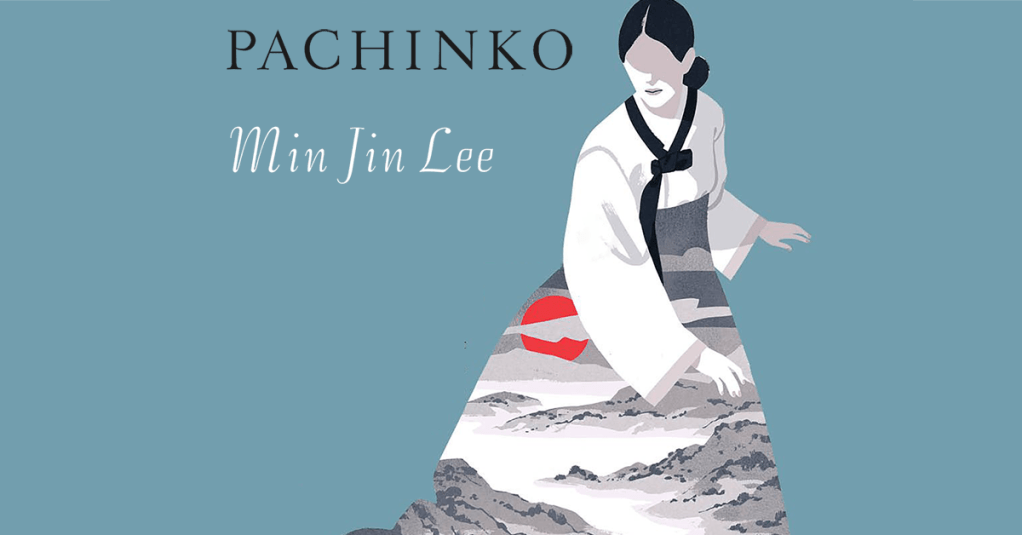
I heavily recommend this book; I was addicted from the very first page and blitzed through it whenever I had a free moment (being an agent has torpedoed my reading-for-leisure habits).
What makes Pachinko so good? I’ve tried placing my finger on it, and the first thing that comes to mind is the pacing. It moves quickly, blowing through events that transform lifetimes; plotlines that would usually be entire book summaries for other works rapidly flipped through in a chapter or two. It’s a very fast-paced approach which is almost unavoidable when tackling a story that spans four-generations.
Not that I’m calling it a trend, but I am noticing – for better or for worse – that newer generations are interested in stories with wider scope that span multiple lifetimes, to see how legacies are forged and how decisions in one lifetime echo into others, years after they’ve passed.
– Fusion magazine
Plot Summary
Pachinko primarily follows Sunja, a young Korean girl whose father, Hoonie, born with a cleft palate and other disabilities, dies a young death as a fisherman and leaves Sunja and her mother Yangjin alone to manage an inn that takes in wandering lodgers. The setting is the 1930s, where Korea has been annexed to Japan, and the coals of the second world war are beginning to char.
Sunja eventually meets Hansu, a wealthy Korean yakuza who has a secret family in Japan, but unbeknownst to Sunja. Hansu is interested in Sunja because of her young innocence and her strong work ethic (though later it is because we learn that Hansu’s wife is no longer sexually active and couldn’t bear him a son). Hansu tells her stories about the city and life in imperial Japan, and Sunja is impressed by his wealth and well-tailored clothes.
Hansu takes her for a mistress and after a few love sessions, Sunja is pregnant with a son, but learns of Hansu’s secret family and tells him to leave. A lodger staying at Yangjin’s inn, a Christian priest by the name of Isak Baek (named after ‘Isaiah’ the prophet), who is inspired by God and the story of Hosea, to marry Sunja and help take care of her soon-to-be-born son who is now fatherless.
They take a fare to Japan paid for by Isak’s brother, Yoseb, and his wife, Kyunghee, who live in Osaka and haven’t been able to bear a child themselves. Sunja’s son is born, and this ends the first act of the book.
Time passes, and Isak is arrested for refusing to bow to the Japanese emperor for religious and nationalist reasons.
Sunja’s son, called Noa (after the biblical ‘Noah’) and their second child Mozasu (after the biblical ‘Moses’) who was conceived by both Sunja and Isak, have to live without their father for some time. Yoseb had to take care of the family’s finances.
Pachinko by Min Jin Lee, Page 174
With the stress bearing down on Yoseb, Sunja and Kyunghee work at a Japanese restaurant to make ends meet. Isak dies of tuberculosis shortly after his imprisonment, leaving Sunja as a widow. With WWII swiftly approaching Japanese soil, Hansu returns and reveals he had been running the restaurant secretly and warns Sunja’s family to flee to the countryside.
Pachinko by Min Jin Lee, Page 200
Noa and Mozasu learn the value of hard work while laboring on the farm. There is a heartwarming reunion between Sunja and her mother Yangjin, but it is undercut by the looming consequences of Hansu’s grace.
We jump in time again. Mozasu is grown up by this point and lands a job at a pachinko parlor where he finds himself a wife and later has a son named Solomon.
Sunja borrows ‘dirty money’ from Hansu after the war to pay for Noa’s tuition at Waseda, a prominent Japanese university not many Koreans get a chance to study at.
Noa (eventually) finds out through this arrangement that Hansu was his real father, a secret kept hidden from him by his mother his whole life and runs away from Sunja and his home to start life elsewhere. This ends the second act of the book.
After time passes, Noa becomes completely assimilated with Japanese culture after living in a city called Nagano, forgetting his Korean roots entirely. That is until Sunja revisits him after not seeing him for decades. Hansu had escorted her but warned her not to meet with Noa. Sunja refuses this.
During their conversation, Noa realizes the scope of what he had done by abandoning his family and his mother, and that Sunja’s decisions were not all entirely her own. Shortly after Sunja leaves, Noa kills himself.
Mozasu, however, becomes rather successful in the Pachinko business, opting not to abandon his Korean roots in any fear of shame, but remained unbothered by the criticisms and inevitable stereotypes. His son Solomon lands at a university in the United States where he meets a Korean American woman named Phoebe, whom he brings with him to Japan. After landing a British banking job, Solomon hopes to carve a life for him and Phoebe there in Osaka.
Despite Mozasu’s heartfelt sincerity and humility, Solomon cannot escape these labels and stereotypes being the son of a pachinko worker, as evident by his employers terminating him because they believe Mozasu’s business is yakuza-run and corrupted. Phoebe leaves Solomon in the end, unable to acclimate to Japanese culture and losing the spirited, bubbly nature that Solomon at first fell in love with.
Solomon resolves himself to work in the pachinko business alongside his father and start anew. The book ends with Sunja visiting Isak’s grave and learns from the groundskeeper that Noa had been visiting the gravesite for years in his time living in Nagano, reassuring her that Noa had not entirely severed his bonds with his family, and that deep down he still respected Isak as his father, even if not by blood.
Narrative Techniques

Pachinko is a book about resilience, struggle, fighting to get by in a world that is often unforgiving and prejudiced. Much of it, to me, reads like a triumph of the human spirit, a trait which to me very much resonates with facets of classic writing.
It is a dense read, a 479-page slog, but one that will fly by surprisingly quickly. I felt Lee had a great sense of flow, and that helped the structure. I had a similar feeling when reading A Burning by Megha Majumdar earlier in the year.
You hear a lot of authors, publishers, editors, and agents talk about ‘flow’, but what is flow really? To me, flow is how readable the story is throughout. It’s how well the story follows a logical structure and varies its language.
What is varied language? I’d say it is a writing style that avoids redundancy, wordiness (like purple prose), and choppiness. All of which play into readability, which is the number one thing all editors – be it line, copy, syntax, or developmental – will grade your writing by.
Varied language is a difficult thing to really master, especially when so many great writers break it. Vonnegut, McCarthy, Austen, practically none of them followed what the modern-day practical writing advice says to do, but that’s because they were already such masters at storytelling that they were allowed to ‘bend the rules’ a little bit.
Debut writers whose story is both choppy and not very compelling? It’s going to be a tough sell for an agent, I’ll say that much. Where Pachinko succeeds, and what writers can learn, is how to be precise with language and how to paint a compelling picture.
Lee spends a great deal of her prose talking about scenery. Be it Sunja’s hometown of Yeongdo in Busan and the marketplace by the marina, or the Japanese farms with the mountains standing in the distance, or the bustling cities of Osaka and Kyoto. She also creates vivid characters, who feel alive and like real figures in history.
Lee’s descriptions do a great job of setting the scene and tone for our characters, even minute details come into play at some point or another, and the stakes still feel grand even though we are only dealing with one small immigrant family fighting for survival in the slums of Osaka.
Because forbidden love, search for belonging, and triumph against odds are satisfying stories and something all of us can take something away from no matter our background. You combine that with rich, detailed prose, that’s how you write a bestselling book.
Focus is also a great lesson from this book. The narrative takes us all sorts of directions, but the themes of family and perseverance in the face of adversity are what string these seemingly endless narratives together. We begin the story rather aimlessly, in a lodging no less where travelers come and go. It’s a great exposition because not much has to be explained here, but it sets us up beautifully for what is to come.
By the end of the book, after four generations of hard work and survival, the narrative comes more into focus and the themes become so glaring they shout at you. Pachinko, in itself as a game about fortune and luckiness, can be a metaphor for life itself, that we live on carrying a hope that things may work themselves out.
Sunja, our primary character who stays with us through four generations and all three acts of the book, is constantly in a position where she must take decisions which drive the story forward. Giving characters agency and space are how you build captivating scenes like these, and why I believe I plunged so deeply into reading this book.
 Donovan Levine | Agent, Writer, Copyeditor
Leave a comment