

Jack Ryan is a political thriller book series (sometimes known as the Ryanverse) written by the late Tom Clancy centered around the titular hero and protagonist, Jack Ryan. Having been adapted into several movies and TV series featuring actors like Harrison Ford and Alec Baldwin, with the latest iteration starring John Krasinski on Prime, it’s a rich and layered series to be sure.
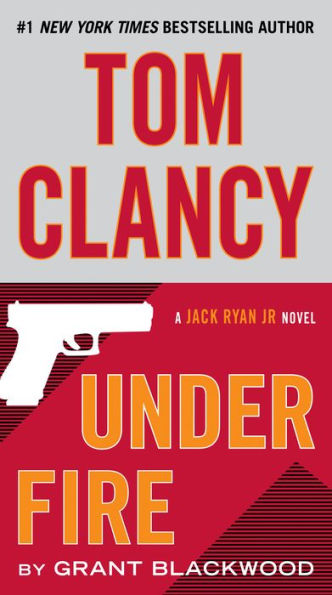
Clancy was a giant of the thriller genre and someone whose books really appealed to anyone even if they weren’t true crime thriller fans. His succinct and high-octane writing style was a force to be reckoned with, and some put Jack Ryan in the same category as Jack Reacher and James Bond, two other thriller juggernauts that dominate the genre.
Jack Ryan is an analyst and field officer for the CIA, as well as a former marine, who navigates intricate international crises while trying to change foreign affairs policy from within. At one point, in Clancy’s later novels, Ryan even becomes President. For two terms.
I’ve read a few of the books, though not all, but I’m a big fan of Clancy’s writing style and intricate plotlines. A lot of writers tend to shy away when it comes to writing multiple subplots and parallel storylines, but Clancy seemed to relish in it and be at his most comfortable when the story becomes chaotic.
Recently, I began rewatching the Jack Ryan 2018 series on Prime and noticed something that lead me to believe why this series, (both as a book and as a TV show) succeeds so well where other series seem to fail.
Yes, Clancy is a big name, and bringing in Krasinski was a gamble of a choice by the producers, given Krasinski’s comedy history as a long-standing member of The Office that ran for 7 seasons. Going from comedy to action is tough. Just ask Topher Grace.
But there’s gotta be more to it than that. There have been plenty of big-name actors that went into big-time franchises/books and the show totally flopped. Jupiter’s Legacy, Slow Horses, Resident Evil, Star Wars: The Book of Boba Fett and The Acolyte, Cowboy Bebop (live-action), The Witcher (later seasons, anyway), Money Heist: Korea, you get the picture.
So, what goes right for a series like this? How do we dive into the story elements that make it successful? Well, I believe it starts with a strong exposition.
Established Protagonist
For many aspiring novelists, the exposition is actually the hardest to write. This is probably due to the fact it’s the first thing people judge when taking a glimpse at the book, and it’s the first sample of the book shown to agents, publishers, producers, beta readers, so on. So, it’s definitely the part of the book authors spend the most nights stressing over.
So, what actually makes a good exposition? Well, there’s no one true answer, but for most fiction genres, especially thrillers, the main thing is having already established protagonists.
Rarely does a story begin with the birth of a character unless it’s an epic, a family saga, or (in some cases) a memoir. Coming-of-age or YA fantasy will typically begin with our MC entering adolescence or perhaps nearing the end of their teenage years and becoming adult. Adult fiction, particularly thrillers and crime, will find MCs in all walks of life.
A character’s life doesn’t start at the beginning of the book. In this case, they’ve lived a whole imaginary life unwritten before we’re introduced to them. A good exposition will show us (not tell us) about this unwritten life through the character’s actions, personality, and beliefs.
Typically, before writing a book, an author will have an outline. A plot outline, a chapter outline, and/or a character outline. A character outline is more than quirky facts and what their star sign is. A good character outline gives a bit of backstory for each character, and I’d recommend a logline-length snippet for minor characters and perhaps a short paragraph for an MC, antagonist, and secondary lead.
This is where you can brainstorm the good stuff. A character without a good backstory is not established, and it’s very difficult to write a good character without that unless you are aiming for an ambiguous character, and even then, I’d still drop a crumb of context for your readers.
Take Batman for instance. For as mysterious, brooding, and gray of a character as Batman is, we all know his backstory; seeing his parents killed in front of him by a criminal, taken in by Alfred, inherits their wealth and family name, and dedicates his life to being a vigilante who vows never to kill. That premise alone makes Batman an established character, and you can take him on any adventure, at any point of his life, with any number of his villains, and write a story based upon that context alone.
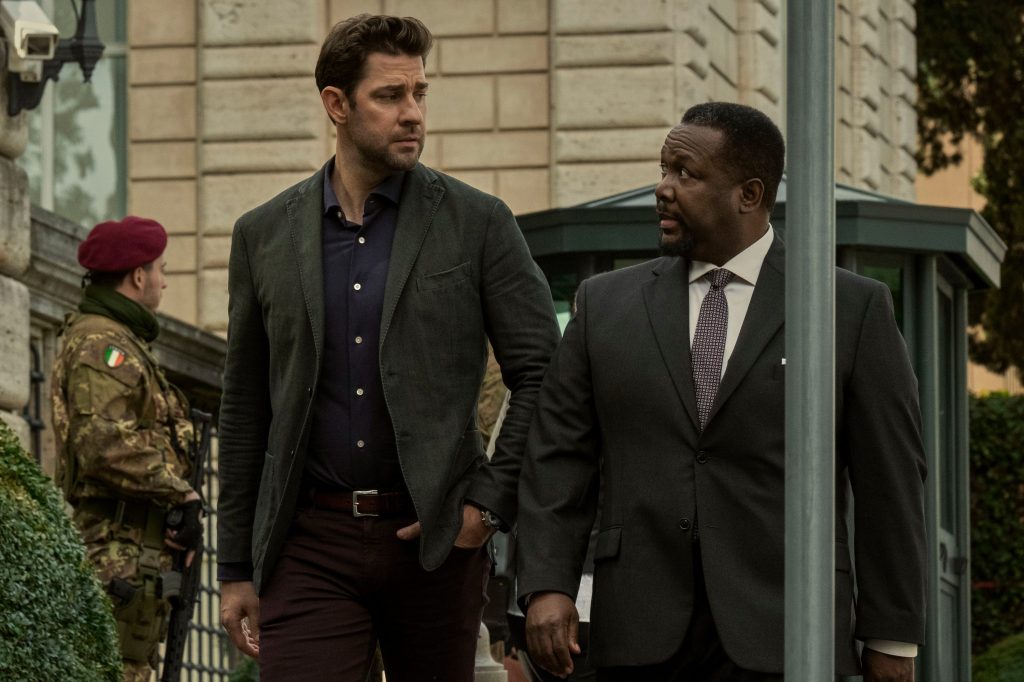
In Jack Ryan‘s case, by the time we meet Jack, in any of the Clancy novels or any of his film/TV adaptations, he’s already a seasoned veteran with a PhD in economics and a strict view of morality that distinguishes him from his peers. He is a strict Christian, and the show very much uses Ryan’s beliefs as a point of conflict in the later episodes.
In the pilot episode of the Amazon series, there are two traits about Ryan that are immediately established. First is Jack’s humility. Despite his military training and his expertise and IQ when it comes to CIA operative missions, Ryan is reluctant to take a flight to Yemen to investigate the mysterious Suleiman, a terrorist mastermind he’d been tracking and building a profile on for quite some time.
Ryan tells his intelligence superior James Greer, “I’m just an analyst, I don’t interrogate people.” To which Greer replies, “Get on the fucking plane.”
Second is Jack’s competence, and attention to detail. His nose for suspicious is the very catalyst that kicks the story into motion once Ryan uncovers a series of unusual financial transactions from a potential “Bin Laden-level threat” that seemingly went under the radar to everyone but him.
Ryan makes a bold choice to freeze the accounts, even at the risk of Greer chewing him out and possibly terminating him, and Ryan is saved by the proverbial bell when a Black Ops team ends up capturing one of Suleiman’s underlings.
Already, without a ton of dialogue and before even diving into very much action, we already understand what it is that sets Jack apart from the run-of-the-mill analyst and operative.
Despite Jack’s high moral compass, it never feels like it is shoved down our throats or too preachy. Jack’s morality is shown subtly through his actions and demeanor, not very much by what he’ll say. It’s the “show-don’t-tell” element that enhances much of Clancy’s writing and TV writers Carlton Cuse and Graham Roland.
In Medias Res
A lot of stories begin in medias res, or “in the middle of things” if you don’t remember learning that term in middle school English class. Very, very common device, but one that isn’t always used most efficiently. Still, a lot of thrillers tend to start this way.
James Rollins’ SIGMA force novels, commonly pitched as the DaVinci Code meets Indiana Jones, always starts off its novels with a bang. A high-stakes, high-octane mission where we see our characters in the midst of some life-or-death fray before we resolve, take a beat, and then are introduced to the first main conflict that drives the plot forward.
Speaking of Indiana Jones, ever notice how every movie in that trilogy (no, we do not acknowledge Indiana Jones 4 or 5) starts off with some random adventure that has almost nothing to do with the main plot of the story? Although the Indy trilogy always used in medias res efficiently, because it would either introduce a theme or introduce a new side character who’d become integral to the story later.
Jack Ryan is no different. The key element we learn when a Clancy novel begins is Ryan’s keen foresight regarding the political underworld. Immediately, we are thrust into a high-stakes political affair and face-to-face with the gravity of the situation.
The Jack Ryan 2018 TV pilot catapults us into the action as we start our series with a flashback of a village bombing of Beqaa Valley, Lebanon. A sinister attack killing innocents, terror ablaze, and then we cut to the calm of Washington D.C.’s Potomac river as we see Jack rowing a kayak in complete tranquility. It’s a great juxtaposition that sets the episode – and the series – up for a riveting watch.
It is after this scene when Jack flags the unusual financial activity that he pieces together must be an organized attempt to move money around for an upcoming attack. Jack’s warning of new terrorist groups, although dismissed by Greer at first, is an alarming threat that echoes to audience members in the real world in the wake of Al-Qaeda, the Taliban, and ISIS among several Middle Eastern terrorist groups and still fresh in our minds.
Clancy’s character had originally been written during the Cold War and thwarting off threats from the USSR and Soviet-backed nations, so the 2018 series is providing a fresh take on a somewhat dated character, with more modern plotlines and themes that align with today’s world.

Established Antagonist
Mousa bin Suleiman is the unquestionable villain of the series. He is a mysterious, methodical man with a dangerous ideology and followers who will do just about anything for him. In many ways, he is a foil to Ryan given how meticulous and competent both men seem to be.
When we meet Suleiman, he’s lying low, undetected as a “bodyguard” before there is an attack on the caravan, and he comes to blows with Ryan before escaping. Then, afterward, he meets with his brother to send him on an important mission, saying he is the only one he can trust because he is family, and later we seem him having dinner with his wife and children, and we come to learn that he is a man who cares deeply about his family, and not fame or glory, not money or ambition like many other clichéd antagonists.
Suleiman is respected by his brothers-in-arms as a soldier and respected by the Muslim community as a sheikh. Already, in just a few episodes, he is a character with a great amount of depth and exposition.
The show also sprinkles flashbacks of Suleiman’s childhood, showing us how the US was responsible for the bombings of his country, which is the driving force behind his hatred for the US. An understandable reasoning and one which (as mentioned previously) is aligned with the current criticism of American foreign affairs.
A solid antagonist makes or breaks a story just as much as a solid protagonist, in my opinion. It is this very shared dynamic that coaxes us into the story. The list of great action series and thrillers out there that didn’t have great villains are few and far between. The reason for this is quite simply that the antagonist represents the stakes and threat of danger that our beloved main cast of characters will face.
A clumsy, incompetent villain just ruins much of the suspense and thrill because the main cast will simply find a way to ‘outsmart’ him and he will predictably meet his demise, whereas an overly bland and run-of-the-mill villain, regardless of how smart they are, will still leave the climax feeling bland and predictable.
Suleiman is not clumsy or bland. It could have been very easy for the showrunners to make Suleiman into a stereotypical terrorist villain, but Suleiman is a very unique character with depth and a strong backstory. He has dimension. He has intriguing motivations which make us want to learn more about how he ended up as a terrorist and raise expectations for the climax with Ryan. It is his adjacency to Ryan that makes so much of the early plot so compelling.
Without Suleiman, this first season likely flops like the other adaptations I mentioned.
Writing exposition is difficult, but by using character dynamics, backstory, outlining, and show-don’t-tell techniques, and having a solid grasp over story structure, it can be hammered away little by little. The exposition in Jack Ryan is an excellent benchmark for those looking to write a hit thriller series or TV pilot.
 Donovan Levine | Agent, Writer, Copyeditor
Leave a comment