

Christopher Nolan and Ridley Scott, two of the best filmmakers in the business, made noise in the box office in 2023 with the releases of Oppenheimer and Napoleon, respectively. However, both of these films garnered wildly different reactions, and here, we’re going to do a deep dive into why that is.
Nolan and Scott are no strangers to historical biopics, although really, the term “biopic” as a genre is being used rather loosely here.
I’ve my own opinions for both directors. Both are great, in my opinion, but I do find a few faults in some of their films.
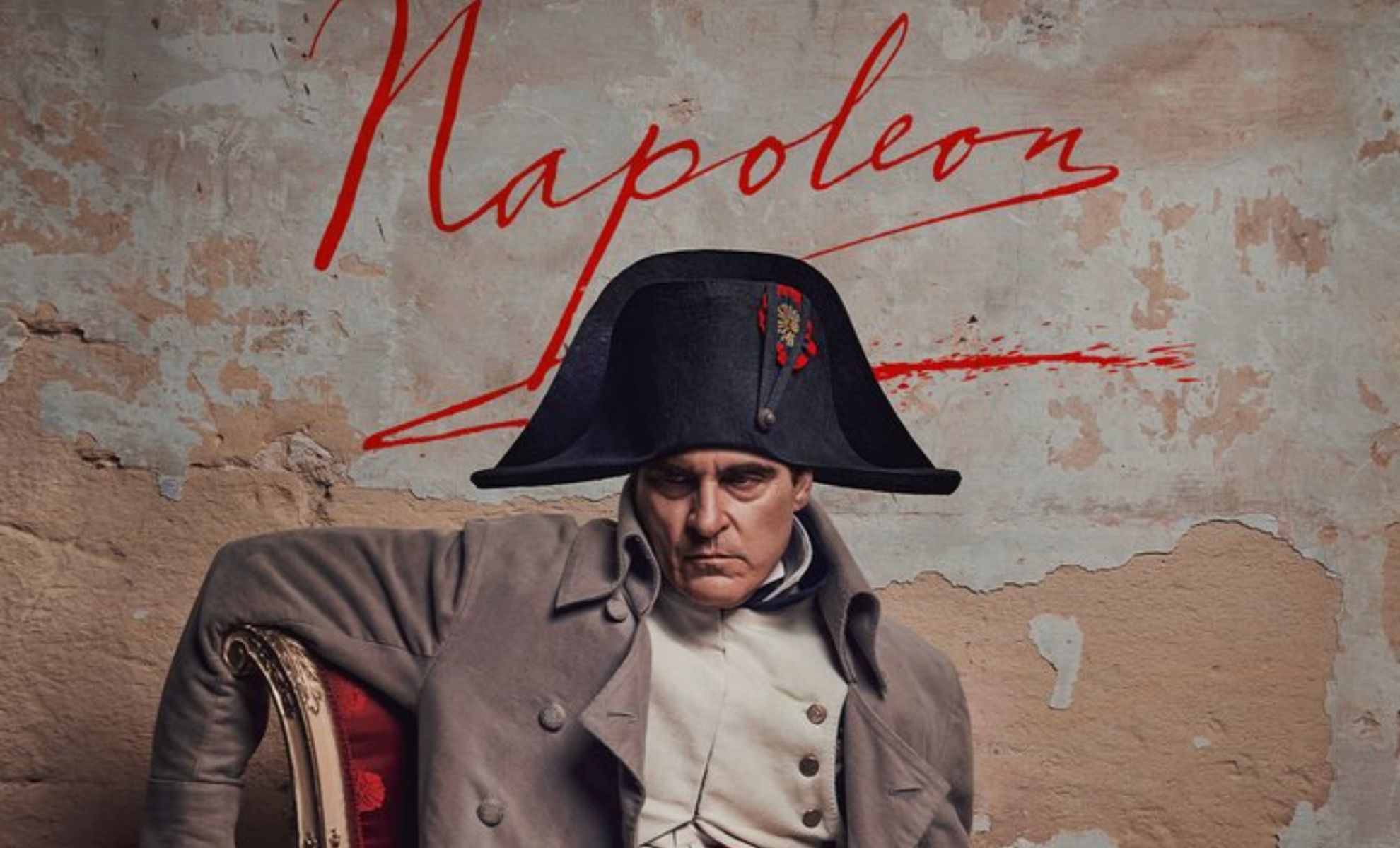
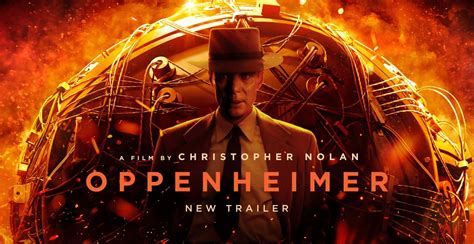
Ridley Scott
Scott, I find, tends to leave a noticeable footprint in some of his historical films that perhaps take away too much from the actual historical accounts.
Particularly, in Kingdom of Heaven (2005), where Scott subverts expectations by favoring the Muslim cavaliers over the Templar Knight Christians during the crusade wars, a conflict in which I believe most all historians agree had no heroes or villains. It was as gray a stain on human history as anything we’ve ever seen.
The Jihad conversion and torture tactics the Muslims deployed during the crusades cannot be condoned or justified any less than the Christian inquisitions and crusade. Regardless of your views on the issue, this is no doubt Scott’s personal insertion of his beliefs into the film, being an atheist that is outspoken in his negative views towards Christianity as a religion.
Scott also directed the historical drama The Last Duel (2021) starring Matt Damon, Adam Driver, Ben Affleck which had mixed reviews. A lot of historians disliked it for its bizarre helmet costume choices and its portrayal of medieval knights as a whole. General audiences also disliked it for its slow pacing, stale gray color palettes, and its ad nauseum repetition of the same event over and over again (a r*pe scene, at that).
I do believe the latter was a creative decision meant to be a nod to the classic 1950s Japanese film Rashomon which some cinema auteurs claim is one of the best classic films ever made. I’ve seen Rashomon, but I’ve already expressed my views about its unusual repetition behavior in a previous blog.
Even with that in mind, Scott still directed one of my favorite films of all time, Gladiator (2000), another epic historical film, although far more on the fiction side and took way more creative liberties than Kingdom of Heaven or Napoleon. It is a classic revenge tale, and one that takes place at the center of what is perhaps the most famous and widely studied ancient civilizations: The Roman Empire.
Not only that, but the incredible performances by Russell Crowe, Joaquin Phoenix, Connie Nielsen, and Djimon Hounsou, combined with the soul-searching soundtrack by Hans Zimmer and Lisa Gerrard has cemented Gladiator forever as a historical epic.
Even David Chase, the creator of The Sopranos, couldn’t help but heap praise for Ridley Scott’s Roman-based blockbuster.
Gladiator isn’t a faultless film though. Don’t let the five-star rating I gave it on Letterboxd fool you, it’s got a few pacing issues right before the climax, and its historical accuracy is, well, not up to par with most Roman history buffs.
Commodus, one of the last Caesars of Rome, whose death (and moreover, his father Marcus Aurelius’ death) marked the end of the Pax Romana. And yes, in real life, he was murdered.
However, it didn’t go down in the epic Colosseum showdown we see in the film, and it didn’t happen at the hands of a gladiator, but by his wrestling partner Narcissus who strangled him while he was regurgitating poisoned food in the bath. But that wouldn’t make for good cinema, now would it?
This is usually the pass we give directors. If the creative decision outweighs the historical inaccuracy, most people tend to let it slide.
Christopher Nolan
I feel Nolan has an uncanny tendency to underscore the exposition of his movies, such was the case for Memento and Tenet. Although I enjoyed both of these movies, there’s no question Nolan’s play on continuity leads to a great deal of confusion.
While techniques that allow the audience to connect the dots are a great sign for respecting the intelligence of the audience, Nolan’s abstractions with time and how we interpret it are at times so pretentious that it’s almost comical, and this exact issue is prevalent in almost every one of his films, including Oppenheimer.
When it comes to historical epics, though, Nolan’s Dunkirk was rather brilliant. While I did hear criticisms from history teachers and historians complaining about the film being a little too “artsy” for something that is a grim and gritty tale such as the Allied evacuation of Dunkirk and Calais during WWII, there is a charm and memorability to Dunkirk that truly makes it one of my faves.
Particularly, the ending shot of Farrier, the Royal Air Force pilot played by Tom Hardy, watching his bomber plane burn in flames just before the Germans surround and capture him is a beautiful shot, made more poignant by – yet again – Hans Zimmer’s striking score in the background.
Without getting too far into the sound editing feats and wide shot usage and any other technical cinema terms, from a mere story standpoint, Dunkirk checks all of the boxes for an epic historical thriller, retelling how the Allies went from the brink of destruction and despair to saving thousands of troops from Nazi capture and turning the tide of the war.
Where Dunkirk and Gladiator served as feel-good heroic epics, Oppenheimer and Napoleon were rooted in controversy from the very moment they went public.
Oppenheimer
Because of how good Dunkirk was, my expectations were high when I found out Nolan was working on a film centered around the Manhattan Project and J. Robert Oppenheimer, “the father of the Atomic Bomb”.
And Oppenheimer delivered on those expectations. It helped that it was an adaptation of the book American Prometheus: The Triumph and Tragedy of J Robert Oppenheimer by Kai Bird and Martin Sherwin, which won a Pulitzer Prize.
While I still found fault in Nolan’s usual pacing issues – in particular, the final act of the movie during Oppenheimer’s interrogation by the personnel security board which milks a large chunk of the movie’s 181-minute runtime.
While the scenes were no doubt intense and added a bit of layers to the complexities of Oppenheimer’s views on the bomb, e.g. him garnering the praise for heading the Manhattan project but consumed by the guilt of President Truman’s decision to drop it on Japan despite the war nearing its close, the conflict between his uranium and plutonium bombs vs Edward Teller’s hydrogen bomb in a nuclear arms race that could put the world in jeopardy, and Oppenheimer’s internal conflict between his own beliefs and his sympathies with the communist party.
This debate runs alongside the already controversial opinion of whether or not Hiroshima or Nagasaki needed to be bombed – a topic I will not sidetrack into but is no less relevant to the complicated reception of the movie. The film’s premiere was banned in Japan, for obvious reasons.
Yet Nolan handled this controversy quite well. I never got the impression Oppenheimer was painted as a saint, nor evil in the invention of the bomb as his intentions were to create it before the Nazis had the chance to, and constantly throughout the film (as in real life), Oppenheimer sought guidance from his fellow scientists and mentors as far as how to handle the project.
Cillian Murphy’s performance I feel played a large factor to this, but I felt Nolan’s rapid style of blitzing through the biographical bits of Oppie’s life in the first two acts of the film only to slowly drown us with the badgering, questioning, and cross examining of the Manhattan Project and Oppenheimer’s allegiance to his country in the last act was probably a perfect example of Nolan’s irregular pacing.
Marketing for Oppenheimer also seemed to have caught lightning in a bottle by premiering alongside Warner Bros.’ blockbuster Barbie dir. by Greta Gerwig. While this at first was done as a ploy from Warner Bros. to distract people from Nolan’s film due to an internal conflict between them, it ended up catapulting both films into unforeseen heights due to the Barbenheimer cultural phenomenon.
Napoleon
So, not shockingly, I had similar hype when I saw the announcement that Ridley Scott was directing a Napoleon movie, similarly with a star-studded cast headed by Joaquin Phoenix and Vanessa Kirby – two Oscar caliber actors – that would also be shot in 70 mm (Digital 4K).
However, conversation around this film did not start off on the right foot. First red flag fired off when people questioned the casting of Phoenix as Napoleon. I don’t think a single person would question Phoenix’s acting, even having worked with Scott prior on Gladiator, but what did come into question was Phoenix’s age and demeanor for the role.
Phoenix, coming off of movies such as Joker, Beau is Afraid, C’mon C’mon, and preparing to release Joker: Folie à Deux, his usual demeanor and gait is more reclusive, depressing, bitter, melancholic, and all of the things that Napoleon wasn’t. Napoleon was described as charismatic, persuasive, lively, and bombastic. For a man who lived such a loud life, I’m surprised Scott went with such a somber actor.
Phoenix was also 48 years old while filming Napoleon. Now, Napoleon lived to be 51 years old, however the film seems to span the course of much of Napoleon’s feats during the French Revolution and his European campaign which would have spanned his mid-twenties to thirties.
This distinction matters. Part of why Napoleon rose to power was because the French people found favor with his youthful qualities in contrast to the new rulers of their government whom they had just beheaded their previous monarchy for. His speeches, dramatic declarations, and ability to understand the French people and their suffering is often compared to the meteoric rise of Julius Caesar.
And much like Caesar, Napoleon went on to become a glorified, almost mythological ruler. His legend preceded him everywhere he went, and in true Caesar-fashion, his ambition led him to war with nearly all of Europe, needing coalition after coalition to stop him, spearheaded by the British, Prussians, and Austrians.
See, the thing about Napoleon Bonaparte is that there’s so much more to his story than just what he accomplished. If you do a blow-by-blow plotline of his militarist feats in his campaign across Europe for a movie, sure, that might be a good film for military history buffs who want to see old-fashioned guts and gore, but for the general audience, film auteurs, and younger viewers, you’ll need more substance on the storytelling side of things to form a complete picture.
Not only that, but Ridley Scott essentially assassinated his own marketing campaign before the film was even released.
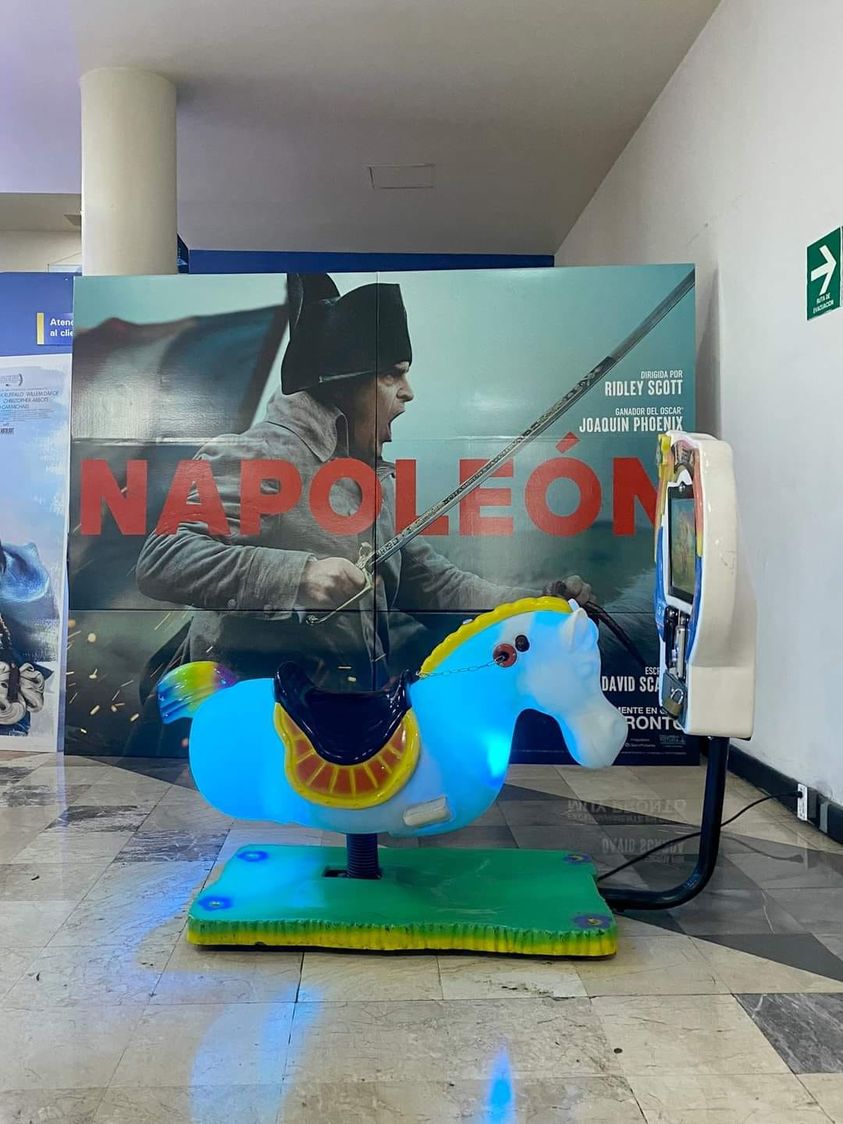
When the first trailers were released, and its early release in France debuted, there weren’t great reactions, particularly from the French and from general historians who noticed inconsistencies in the film. One historian on Sky news even claimed only 38% of Napoleon was historically accurate, which is rather alarming for a historical epic that has a runtime of 2 hours and 38 minutes.
Most reasonable directors will acknowledge if their film has historical inaccuracy. Even Scott himself, in the past, has acknowledged this. And the typical interview response is: “Well, we made a creative decision to make the script more appealing.” And while this unfortunately comes at the expense of historical authenticity, at least it’s honest. (FilmSpeak does a great video on this.)
But that’s not what Scott said in response to the Napoleon film backlash.
Scott told reporters in interviews that “historians need to get a life” and that historians don’t know what they are talking about, they are just “writing a book based on a book someone else wrote”, as if the study of history is just some millennia-long game of whisper-down-the-lane and not a careful, methodical triangulation of fact-checking.
Not only did Scott apologize for Napoleon‘s faults, but he doubled down and basically said that historians don’t know what they’re doing. Which is a massive and wild claim, to say the least.
This is not professional authenticity, this arrogance and vitriol on Scott’s part towards his critics. And quite frankly, it shows a glaring lack of respect for such a major aspect of human existence, the study of history. And for a director who I certainly have loved and respected for a long time because of my love for films like Gladiator and Blade Runner, this was really disappointing to see.
Nolan and Scott are masters of their craft, no doubt about that, but even these two filmmaking giants can make mistakes, and we as audiences and those of us who are aspiring storytellers can learn a lesson in historical authenticity from them.
 Donovan Levine | Agent, Writer, Copyeditor
Leave a comment