

Steamboat Willie’s copyright just expired. If you’re not familiar, Steamboat Willie was the world’s first introduction to the most iconic animated character perhaps in history: Mickie Mouse.
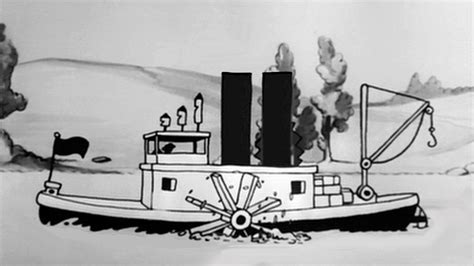
In the United States, copyright law is extremely strict. It is one of only a handful of countries where the copyright for an original IP does not expire for 95 years.
Steamboat Willie was an animated short film created in 1928. So, on January 1st, 2024 (Public Domain Day), Steamboat Willie, and with it, the first iteration of Mickie Mouse, became free for public use.
Let’s be very clear. The iconic character of Mickie Mouse (below, right), as we know it, is not available for public use! Only the version of Mickie as it exists in Steamboat Willie (below, left) is available.


Disney made sure to copyright the later versions of the iconic mouse and likely will continue to do so as the years pass by.
It is also trademarked as the official logo of the entertainment giant, so good luck fighting the court if you try to make Mickie your new company logo or IP.
However, having at least one nominal Disney IP in the public domain should count as a win in itself.
What took so long? The number 95 is rather arbitrary, but there is a reason for it. Originally, the number was 14, with maybe an extended 14 after it if the copyright holder pushed for it. Then, through many courtroom rulings and appeals, over the years new laws and acts were amended that kept pushing the number further and further, before it eventually reached 95 years in the copyright term extension act in 1998.
The collective worry was that monopoly companies (such as Disney, Warner Bros, Universal Studios, etc.) would just lobby and lobby and lobby every time it came time for one of their most prized, iconic, and recognizable IPs was nearing its time to enter the public domain.
That’s exactly what had been happening. Until 2024. Most surmised there might be some last-minute interference before this New Years, but there wasn’t. What this might mean is that lawmakers are finally standing up to corporatism rather than bending the knee. And a lot of popular IPs, such as Peter Pan and Tigger, as well as books like All Quiet on the Western Front, Orlando, Tarzan, and a number of others are entering the space as well.
As time goes on, plenty other 20th Century works will continue to enter public domain, which will give creative storytellers new opportunities to add perspective to already-established works.
Is copyright law corrupted?
I’m not a legal scholar by any means, but over the past two years I’ve accepted and started positions as a copywriter and grant writer for lawyers in Philadelphia and started up a boutique literary agency. I’ve learned quickly that both these professions require an understanding of A LOT of ‘legalese’.
As a creative writer, it’s not fun learning these. But it is essential. And I’ve realized that anyone who wishes to make it out as a writer, creator, producer, etc., is going to need to learn a lot about contract law.

Copyright is something I’ve long found polarizing. Even since I was a kid, learning about copyright laws, something about it didn’t sit well with me. While yes, on the one hand, I completely understand the need to protect an IP. Anyone can over and swoop up what you worked so hard to create and frame it as theirs, so without a legal safety net, you’re basically screwed.
However, the way copyright is structured is entirely in the hands of the companies which control it.
Take traditional publishing for instance. When you sign a contract with a publisher, you are not relinquishing your copyright to the book. Your copyright, in US law, stays with you. You don’t even need documentation formally, so long as you are its creator, you automatically hold the copyright until it is otherwise sold by you, or you die.
However, what you are relinquishing is the right to make and distribute it. Once you’ve signed a contract, that publisher is the sole distributor of whatever medium you opted for in your contract and whatever subrights (audiobook, e-Book, hard cover, scripts, comics, ads, etc.)
Having your book made or distributed any other way without the publisher’s consent would be a breach of your contract, and now you’re in a world of trouble. That’s why agents are here, to make sure you understand the fine print of your contract and that you aren’t getting screwed over by these bigger, richer publishers.
So why is public domain a good thing?
Originality is great. Wonderful even. But is it actually possible? What stories are wholly original?
I made a post earlier last year about creating about writing story concepts that have already been done in a way. While, obviously, you never want to be accused of copying a story, there are many ways to expand upon a story, re-imagine it, and retell it.
And sometimes, this is a good thing. Ironically, Disney itself is a company whose origins are rooted in stories that weren’t theirs. Cinderella, Peter Pan, Rapunzel, these were much, much older stories that were in public domain, so Disney retold these stories as animations that became childhood icons and celebrated works.
And sure, there is the possibility that, now that something’s publicly accessible, that some creators come along and ruin it. I’ve already seen horror movie scripts and strange, perturbed internet mashups of the Steamboat Willie Mickie, and it’s only been two days since the copyright expired.
Yet, like with all things democracy, you have to deal with both the good and bad of letting people choose for themselves. Some will choose to create art, and others parody.
Public domain is a very democratic thing. Its very existence is able to block entertainment monopolies from holding onto certain IPs forever. Once an IP is out of the hands of a corporate conglomerate, the indie creative geniuses can now take a shot and reimagining some long-forgotten characters into something newer.
Without public domain, there would be no nuance to storytelling, and the commercial revenue of age-old stories would always flow to the same corporations year after year, decade after decade.
Honestly, many people expected it to be this way forever, but now that Steamboat Willie hasn’t been blocked by lobbying, there is hope that things don’t have to be that way forever. And that, ladies and gentlemen, is a victory on its own.
After 95 long years, the mouse is free.
 Donovan Levine | Agent, Writer, Copyeditor
Leave a comment