

Point of View is a critical literary technique when tackling a fiction novel. It is the usage of narrative voice in a way that clearly defines how much knowledge both the narrator and the reader have. We refer to these as 3rd and 1st person, and within 3rd and 1st, we have subsets of POV known as “limited” and “omniscient”.
And among these, we usually have some interesting literary puzzles which develop, and that’s the trick of combining 3rd and 1st by using multiple POVs. In other words, perhaps in different parts, acts, sections, chapters, and what-have-you, a new character will narrate the story in 1st or 3rd person.
This technique allows for a lot of fascinating dynamics between both characters, storylines, and literary usage of irony. Having the reader know something that certain characters don’t because of a confession made during a different POV can of course make for some suspenseful and dramatic climaxes towards the finish.
So, this begs the question, should an author consider using multiple POVs in their novel?

This is something that stumps me as well, as a writer, an agent, and as a reader, especially when dealing with a book that’s richly dense with characters and follows a (relatively) linear story graph.
There’s a lot of ways in which this enhances the novel, and a lot of ways it doesn’t. We’ll get into those in a moment.
The reason I am broaching this subject is because over the past year I’ve had multiple clients run into this same issue. Is the book missing something? Could the narrative be stronger?
These clients had many publishing editors come back to me after I queried their manuscripts who all said the same thing: “The narrative voice didn’t pull me enough” or something vaguely along those lines.
Now – sometimes – that could be editor-speak for “This novel isn’t ready yet”, but in several of my cases, I don’t think that’s what it was.
I didn’t believe it was a matter of writing quality, as of course I expected the quality of the writing to be better than average in some cases, because I myself had proofread and edited the manuscripts, and the stories themselves were intricate and fascinating enough to be published – not to mention they were of underrepresented communities whose stories are being actively sought out by publishing editors by the year.
When it came to my second round of edits, it dawned on me that the manuscripts may have needed added literary techniques to spice them up a bit – give the reader a little more to chew on than the run-of-the-mill fiction novel. Both of these clients’ novels featured multiple character motivations, subplots, and at times, multiple MCs.
So, I recommended they reframe their story in a way to include multiple POVs.
They both experimented with this idea and edited a few sample chapters where necessary. They ultimately decided against it and to keep the novel stet. But I thought it necessary to make a post here outlining some of the perks and pitfalls of using this technique with a few examples from literature and pop culture.
Here is when I believe using multiple POV works in a novel:
- Family sagas
- This is really one of the few types of books where multiple POV is pretty much a necessity. When telling a story spanning across multiple generations, the characters we follow will grow, change dramatically, and the ones we start our story with may no longer be around any longer. This will involve a more linear and chronological shift in POV, but POV shifting nonetheless.
- Repetition and Historical retellings:
- Using cinema examples this time, both the films Rashomon (1950) and The Last Duel (2021) use repetition to retell the same event but through the lens of a different character. In Rashomon, this is done to convey mystery and find out what really happened, who was truly the suspect, and who was really the victim. Each iteration gives the story an added sense of ambiguity, leaving it up to the viewer (or the reader) to decide for themselves which event was really true.
- The unfortunate caveat to this technique is you can almost always tell that the true account is the last one shown in sequence. This can sometimes kill the intention of ambiguity, even if it is never outright stated which POV is true, the order of POVs can sometimes give it away.
- Using cinema examples this time, both the films Rashomon (1950) and The Last Duel (2021) use repetition to retell the same event but through the lens of a different character. In Rashomon, this is done to convey mystery and find out what really happened, who was truly the suspect, and who was really the victim. Each iteration gives the story an added sense of ambiguity, leaving it up to the viewer (or the reader) to decide for themselves which event was really true.
- Multiple protagonists/deuteragonists
- Some authors really can’t decide who they want their main character to be. This technique can work when an MC either shares too many flaws to realistically carry the interest of the reader, or when two foils are fighting each other (either physically or ideologically) and only one can emerge from the conflict, or if the novel simply demands more than one focal point for the story concept to work.
- Examples of books that have multiple MCs: The Night Circus by Erin Morgenstern, Shiver by Maggie Stiefvater, Will Grayson, Will Grayson by John Green, The Girl with the Dragon Tattoo by Stieg Larsson (also fits in the suspense/thriller bullet below) Thirteen Reasons Why by Jay Asher.
- For scriptwriters, there are ample films with utilize the dual-MC technique to create a sort of internal battle for the viewer on who to root for when the film reaches its peak. The movie Heat with Al Pacino and Robert De Niro executes this perfectly.
- Some authors really can’t decide who they want their main character to be. This technique can work when an MC either shares too many flaws to realistically carry the interest of the reader, or when two foils are fighting each other (either physically or ideologically) and only one can emerge from the conflict, or if the novel simply demands more than one focal point for the story concept to work.
- Support character Narrator
- The Great Gatsby is a good example of a narrator (Nick Carraway) who serves a supporting/observing role to the MC, however Gatsby only uses 1st person throughout the whole story without shifting to multiple POV, and some events that transpire without Carraway being present are merely told as recounts or hearsay.
- No Country for Old Men (the novel) is considered a 3rd person omni, but it is generally considered that Sheriff Ed Tom Bell is the lens we see this world in since each chapter opens up with his monologues. He is also considered to be the “old man” referenced in the novel’s title, as the horror of the events that unfold gives him an uncertainty about the triumph of good over evil, thwarting his own values into doubt. Yet the protagonist of the book is Llewellyn Moss, who is the first character we are formally introduced to and who, in a way, sets the plot into motion.
- Perhaps my favorite usage of this technique is Harper Lee’s To Kill a Mockingbird. It would have been so easy for Atticus Finch to have served as both the narrator and protagonist, but I believe Lee purposely split these roles and had Scout Finch serve as our main character and narrator, because to see racism and the trial of an African American man observed from the POV of a young white southern girl gave us a more innocent, black-and-white lens and childlike-view of the tragedy and misgivings racism brings to society.
- Epic Fantasies
- Much like family sagas, this literary genre goes without saying. When worldbuilding and structuring a vast story that spans countries, worlds, and generations, you are going to need multiple POVs to bring it to life. Works like Game of Thrones, Narnia, Ender’s Game, or the comic book world of MARVEL, DC, and so many others change POV and main character roles at a whim, and it’s part of what makes them so great. An epic fantasy shown through only the lens of a single character would more than likely struggle to keep common interest.
- One could also argue the usage of having so many MCs/characters is part of what helped these IPs pop off the market so much. When you have such a vast wealth of characters, there’s a higher chance a viewer can get reeled in. Even if they don’t like the MC, there’s plenty of side characters and epic subplots going on to keep the interest alive.
- The caveat is that in some of these cases – as is becoming the case with Marvel and Star Wars (two IPs owned by Disney) – is that readers/viewers become more like consumers, and these large casts of characters begin to exhaust the consumers, making all the new shows, movies, books just feel like content rather than art.
- However, a high-stakes fantasy series with only one sole MC, like The Hunger Games for instance, it’s a bit more of a gamble. If you don’t like Katniss Everdeen as an MC, then you’re probably not going to have much interest in the series as a whole.
- Much like family sagas, this literary genre goes without saying. When worldbuilding and structuring a vast story that spans countries, worlds, and generations, you are going to need multiple POVs to bring it to life. Works like Game of Thrones, Narnia, Ender’s Game, or the comic book world of MARVEL, DC, and so many others change POV and main character roles at a whim, and it’s part of what makes them so great. An epic fantasy shown through only the lens of a single character would more than likely struggle to keep common interest.
- Suspense/thriller
- A narrative shift can help glean insights into the hidden motivations of certain characters. Many “whodunit” mysteries use this technique to weed out the suspects and ultimately arrive at the climactic reveal. In Gillian Flynn’s Gone Girl, we see a radical shift in the story from Nick, the husband and framed killer’s POV, to Amy, the wife and criminal mastermind’s POV, right around the midpoint of the story, and it works as a stunning plot twist here.
- Shakespearean drama
- Romeo and Juliet actually falls into the multi-protag bullet, and many of Shakespeare’s works and the works he later influenced utilize multiple POVs to build a more and more complex and layered story that would work to a more dramatic climax by the time Act IV and Act V rolled around.
For each of these techniques to work, there’s going to be a lot of chart-making, outlining, character construction, or worldbuilding to pull it off properly. So, you’ll have to ask yourself, is this the direction you want your story to go?
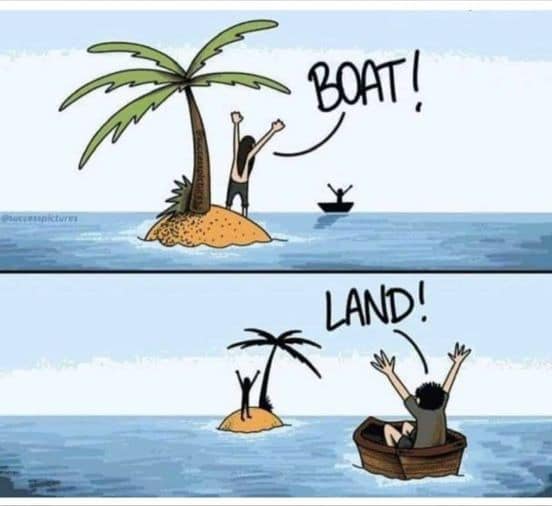
Everything is about perspective.
And really, this is a question which wholly depends on the type of story you want to tell. If it’s a kind of story which lives and dies on the neck of one character in particular and their worldview, then you’ll probably stick with one POV, whether it’s 1st or 3rd limited. If you’re aiming for a story that has a vast world filled with lovable characters and want to show multiple sides to a conflict, then POV changing or using 3rd omniscient is probably the better choice.
The pitfalls of this technique are many in number. Worldbuilding and multiple MCs is not an easy thing to pull off. Sure, when it does work, it’s beautiful, but it often takes a A-grade understanding of storytelling and character arcs. Your dual-MC novel will need to have just that: dual MCs.
And that can be difficult as – sometimes without realizing – your secondary MC may not fill all the boxes as your first, and you end up creating a strange power-dynamic, secondary deuteragonist role that was intended. The operation was a success, but the patient died.
Similarly, I’ve seen readers critique a book because it shifted between too many POVs. If it’s not done properly, with charts, outlines, or effort, it can get clunky and messy. It won’t resonate with a publishing editor or agent, and it certainly won’t with your readers.
In some cases, multiple POVs aren’t entirely necessary. While Gatsby certainly would have been an interesting novel had we switched between both Gatsby himself and Carraway in narration, it simply wouldn’t be the same classic we know it as today.
Actually, it’s probably better to decide to do multiple POV before even attacking a manuscript. Changing up the entire narrative structure in your novel after it has been written is going to take a lot of time and hard work, and that’s not always something writers are willing to do – especially if they know that it can still get rejected anyway.
It’s about the gamble you are willing to take with your novel. Your manuscript is your IP, and perfecting it can sometimes seem like a never-ending process of people-pleasing. Will my editor like it? Will my agent like it? Will the publisher like it? Will my reader like it?
In reality, it’s less about these questions, and more about fulfilling the narrative and literary duty of the novel and its characters. The story you weave will unfold itself without you even realizing, sometimes. These techniques: POV, repetition, suspense, genre-bending; it’s all just means to achieve that end.
Sometimes it’s not always the novel which needs the perspective change, but its writer. To view the story in a different lens than how it was viewed before, that can sometimes be a more powerful catalyst for your writing than anything else.
 Donovan Levine | Agent, Writer, Copyeditor
Leave a comment