

My best free advice as a writer to another writer is to read. Read as much as you can. Read the contemporaries, read the classics, read from a local author, read from a bestseller, read from a debut. Read the free stuff on Inkitt and Medium. Read all of it. This is the John Wesley-style call to action for reading.
I know a lot of writers – a surprising and honestly alarming amount of writers – who say they do not read as often as they write. Their best advice to writers is instead to keep writing. I often hear the adage: “You cannot edit a blank page” and “most first drafts are garbage”.
These are true, I agree, but most of us are human, and we don’t always have to spend our every waking moment writing. In fact, we shouldn’t.
Writing is about reflection. And reflection only comes after experiencing.
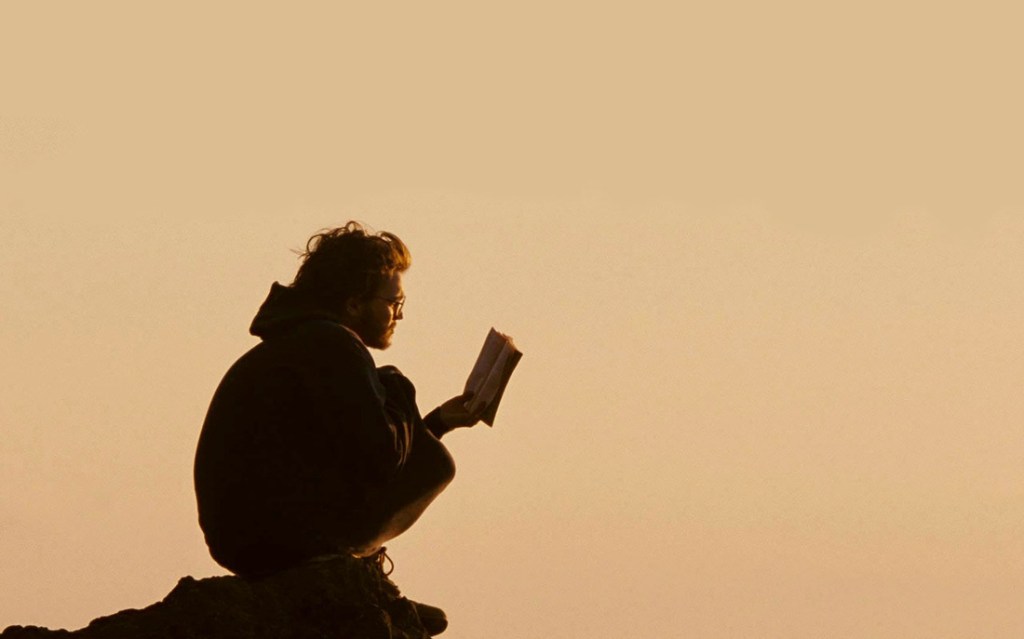
If one climbs a mountain, I imagine the writing will be done after they are bundled in a parka and sitting cozily by a fire with the mountain in window view. Not pre-climb or mid-climb. When you’ve conquered the mountain, you’ve conquered the story. You’ve reached the end.
And the thing about stories, they have to have an end.
Reading is also about reflection. It is a reaffirmation of virtue.
There’s such a powerful catharsis when completing a book. The book-end conclusion to a story (yes, even if that book has sequels) is unlike any other consumption of media, and to me it is such a crucial factor to why reading is so powerful.
Even in today’s age of movies, TV, and animation, books still pack the hardest punch. Few war movies quite wrenched me as much reading Paul Bäumer’s sorrowing transformation in All Quiet on the Western Front, Snowden’s fate in Catch-22, or even the childbirth scene in A Farewell to Arms.
These scenes have stuck with me more than their movie counterparts, because the writing is so visceral, and our imaginations form the connections in the deepest pockets of our brain’s memory.
It is such an obvious thing, but it is something a lot of writers seem to forget. They forget the reason why we write. If no one reads, our writing is rendered useless.
It is not just an advice or a nice adage, it is the duty of a writer to read.
“Reading is to the mind what exercise is to the body. As by one, health is preserved, strengthened, and invigorated: by the other, virtue is kept alive, cherished, and confirmed.”
– Joseph addison
Beyond that, like any craft, consuming more of it will help create a greater understanding of it. Maybe you’re a writer who got all their ideas from passed down family stories, a movie you’ve rewatched 100 times, a playlist of songs you’ve curated, or even journaling your maladaptive daydreaming (ok, I’m guilty).
These are great sources for the foundation of your novel, but to hone your skill at writing, reading comparative novels are the blueprint for it.
So, here’s ten reading exercises to try, and see if it will help get the creative juices flowing. Read a novel that specializes in:
- Narrative lens. Select a novel and observe through whose eyes we choose to see the story from.
- Think about how To Kill a Mockingbird tells the story from Scout’s perspective, a child between the ages of six and nine. Atticus Finch is one of my favorite characters in all of fiction, but I honestly couldn’t say if the story would work as effectively if told from his perspective, nor that of Jem Finch or Tom Robinson.
- Character Study. Choose a well-developed character from a novel and analyze their traits, motivations, and character arc.
- Earlier, I mentioned Paul Bäumer from All Quiet on the Western Front, who makes the change from the boyishly heroic and patriotic to bleak, maligned, and disillusioned until he ultimately seeks his own death. The change is gradual as it is evident, and builds upon Erich Maria Remarque’s stark anti-war messaging.
- Okonkwo from Things Fall Apart is university master’s thesis-worthy when it comes to character analysis. His determination to be everything his father wasn’t and ultimately led him to the same place in the world as his father by some tragic twist of fate.
- Dialogue Analysis. Find a book with strong dialogue and analyze how the author uses dialogue to reveal character, advance the plot, and create tension or conflict.
- There’s a lot of *interesting* dialogue out there, to say the least. Daisy Jones & The Six opts to use the dialogue as the full story by having the book written as a series of fictional interview transcripts rather than your traditional prose, and this works effectively because you’re met with multiple perspectives of the same scene at once.
- It also beautifully enhances the dynamic between Daisy Jones (the protagonist) and Billy Dunne (the deuteragonist).
- There’s a lot of *interesting* dialogue out there, to say the least. Daisy Jones & The Six opts to use the dialogue as the full story by having the book written as a series of fictional interview transcripts rather than your traditional prose, and this works effectively because you’re met with multiple perspectives of the same scene at once.
- Setting. Read a novel with a richly described setting and analyze how the author brings the setting to life. Consider the sensory details, atmosphere, and how the setting contributes to the overall theme of the story.
- Life of Pi blows almost every other book out the water (literally!) with its setting descriptions. When THE OCEAN feels like a character in itself, you know you’ve done a pretty damn good job at setting the scene.
- Piranesi by Susanna Clarke is a fantasy novel where Renaissance and Baroque era paintings, statues, and decor operate as the setting of this Magical Realism modern classic.
- Aesthetics and Vibe. Find a story where the characters and setting contribute to a certain kind of mood and a certain type of feeling.
- Another MR gem is The Night Circus by Erin Morgenstern, which is almost 90% vibes and 10% plot. If fans are actively making playlists of your novel, you’ve aced this category.
- Annihilation by Jeff VanderMeer is where you can find the eerie and surreal Area X, where nature has reclaimed Earth, and humanity with it.
- Symbolism and Imagery. Dissect a novel with strong symbolism or vivid imagery. Identify recurring symbols or motifs and analyze their significance in the story. Wasn’t this our favorite aspect of English class? Finding out why those damn purple curtains were actually purple?
- The Divine Comedy (Divina Commedia) by Dante Alighieri is of course loaded like a big Philly sub with symbolism and imagery.
- People in Italy will determine how Italian you are by how many lines of this thing you can recite. And honestly, every single category on this list can be checked off with this masterpiece.
- Beloved by Toni Morrison is littered with symbolism regarding slavery and its generational echoes throughout American history.
- The Divine Comedy (Divina Commedia) by Dante Alighieri is of course loaded like a big Philly sub with symbolism and imagery.
- Twists and Subversions. Search for a novel with cleverly crafted and original twists that subvert the reading audience’s expectations.
- Obvious one, but any Stephen King novel or Agatha Christie novel should fit the bill here.
- Foreshadowing and Suspense. Consume novels with effective foreshadowing and suspenseful elements. Analyze how the author builds anticipation, creates tension, and hooks the reader through foreshadowing, cliffhangers, or dramatic irony.
- See above.
- Theme Exploration. Dive into a novel with thought-provoking themes and analyze how the author explores and weaves those themes into the story.
- Loss & Grief: The Book Thief by Markus Zusak and The Lovely Bones by Alice Sebold.
- Love & Beauty: The Fault in Our Stars by John Green.
- Corruption: 1984 by George Orwell and A Burning by Megha Majumdar.
- Rebellion: Brave New World by Aldous Huxley.
- Coming-of-age: The Perks of Being a Wallflower by Stephen Chbosky.
- Redemption & Forgiveness: The Kite Runner by Khaled Hosseini.
- Social Injustice: The Sum of Us by Heather McGhee and The Hate U Give by Angie Thomas.
- Family & Marriage: Crooked Hallelujah by Kelli Jo Ford, Pachinko by Min Jin Lee, and The Henna Artist by Alka Joshi.
- Friendship: The Sisterhood of the Traveling Pants by Ann Brashares.
- Genre. Read novels from different genres to expand your understanding of storytelling techniques and conventions specific to each genre. Analyze how authors employ genre-specific elements, such as world-building in fantasy or suspense-building in thrillers.
- Colleen Hoover has effectively broken the publishing industry by finding a niche in complex contemporary romance and running with it – as nearly every single release has become a book club phenomenon.
- On the opposite side of the genre spectrum, James Patterson (who, if you didn’t know, has written every book ever) has the action thriller novel in an absolute chokehold, with a chunk of entire publishing imprints dedicated just to his books alone…
There’s a lot of books to read – and so little time. I once tried incorporating a 30 minute ‘reading sesh’ when I wake up and before I go to bed. I also tried a chapter sprint and made sure I finished anywhere from 5-10 chapters of a book a day.
There’s ample reading challenges out there, including the 52 Book Challenge and the Unread Shelf Project, that can pull you out of your comfort zone or current reading slump.
This blog from Write It Sideways likewise has great exercises for fiction writers to practice.
For those who enjoy less rigorous or Type-A personality routines (as I typically fall out of any habits I try to set for myself), a good rule of thumb is to simply pick up the book no matter how you feel or regardless of if you want to read, because once it’s in your hands, it’ll be hard not to open up a page.
So long as you’re reading and spending time in thought, you are fulfilling your duty as a writer.
 Donovan Levine | Agent, Writer, Copyeditor
Leave a comment