

I’d like to preface by saying that I do not use TikTok; TikTok disappearing to me would be no different than when Vine came and died and everyone went on with their lives.
Yesterday, March 24th, Congress held a hearing that threatened to ban TikTok from the US market.
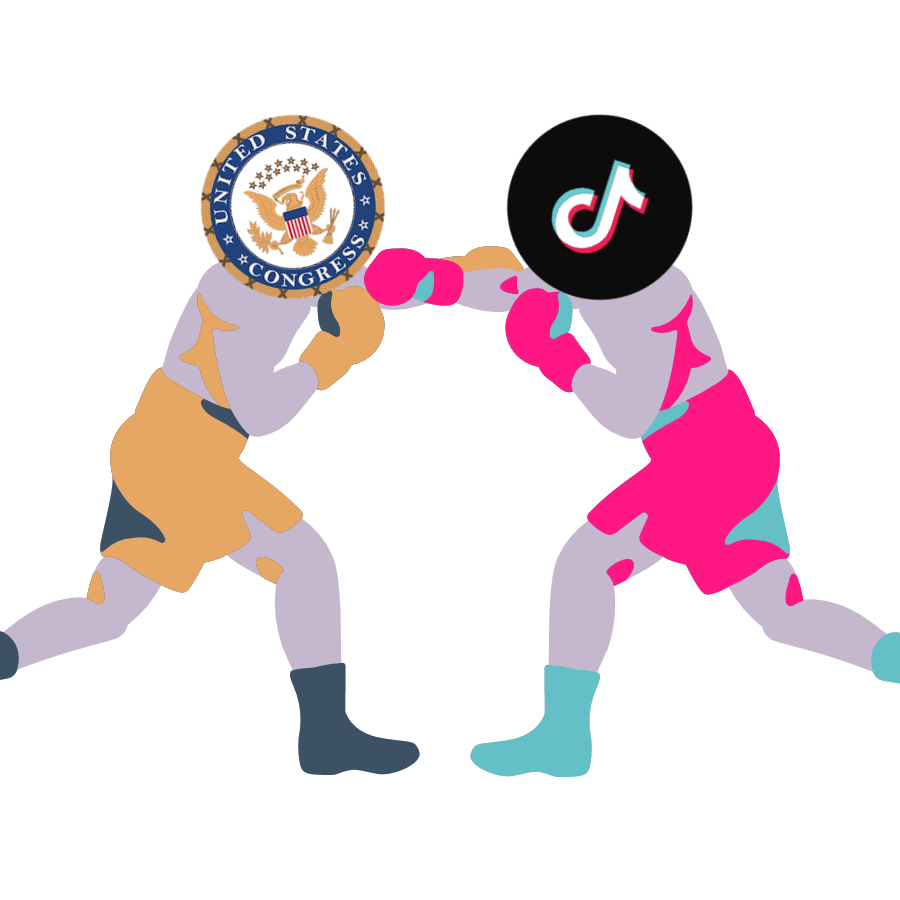
The US isn’t remotely the only country considering this. There’s a litany of countries who have already banned the app, including Belgium, Canada, India, Norway, New Zealand, and several others.
The US has been attempting to ban it ever since the Trump administration, with equal concerns of Chinese spy intervention via TikTok’s parent company: ByteDance.
Like any social media, TikTok has pros and cons. I personally find it an annoying app, and short form content gives me no enjoyment, there’s nothing to chew on and I’m bombarded with millions of different topics, people, emotions, etc. in a matter of minutes.
As a book & film enjoyer (typically long-form content), I like to be immersed by whatever it is I’m consuming and be left with a lot to digest afterwards that keeps me thinking about it for hours, days even after I’ve finished.
However, that’s just my personal preference of course- and I’m more than aware that the overwhelming majority of my generation prefers this type of content. It’s informative, it’s a safe space for certain users, a creative space for other users, it’s occasionally funny; it no doubt provides benefits that other social media platforms simply don’t offer.
I am by no means advocating the banning of the app just for my own personal gripes with it; it just means I’m stoically indifferent to whatever Congress’ decision ends up being.
However, there are legitimate concerns about the app regarding its privacy and security. This is more than just a social media issue, although Congress did themselves no favors by repeatedly demonstrating their own ignorance when it comes to social media.
I can’t help but feel déjà vu, as we just went through this exact same drama when Facebook was under fire for the Cambridge Analytica scandal.
It does raise a critical question. Of all the issues in the world, and more specifically in this country, why is TikTok the one that finally unifies Democrats and Republicans on the same side? Especially when most social media users are at risk of manipulation and data-stealing when joining Facebook, Twitter, Snapchat, and a slew of other platforms.
After all, how many of us non-paralegal types actually read the terms & conditions? Apparently, a staggering 83% of us do not.
It all circles back to the perception of fear regarding foreign intervention on our most vulnerable and impressionable population: teenagers.
Some may claim this is merely anti-Chinese bigotry. After all, we’ve just finished reeling over the “China balloon” scare, and there have been a number of head-to-head clashes between US-China relations dating back generations, that have only escalated over the years.
But the reality remains that we cannot truly prove TikTok is any more data-sensitive than its social media rivals.
I’ve already heard a collective number of older Gen-X friends claim that the country’s collective IQ should go up following the app’s ban. But this is really just an age-old misconception that the youth “aren’t very smart” for having “short attention spans”, even when really it’s more to their credit that they can consume and relay information at a faster rate than ever before.
And plus, TikTok isn’t really going anywhere, even if it’s banned. There’s at least half a dozen ways to replicate TikTok content via other apps, including reuploads on YouTube and Instagram like we saw when Vine shut down, and alternative story-content apps like Zigazoo, Likee, MuStar, the list goes on.
Since introduction to the US, there’s been nothing but turmoil surrounding the app, so the need for less controversial, less toxic, and more venerated alternative seems even more apparent. Though, the TikTok mob might tar-and-feather me for saying this.
We no longer have Vine, we no longer have Google+, we know longer have MySpace (the original, anyway), so is it really the end of the world if we lose TikTok too? Life goes on.
 Donovan Levine | Agent, Writer, Copyeditor
Leave a comment