

I recently had a concall with a producer and a client of mine. Like any pitch, query, or negotiation, there’s a lot of back and forth. Creative differences between all three parties, and afterward you’re left wondering “Where do we go from here?”

I mentioned in my last article that rejection happens. It’s always going to happen no matter how good of a writer you are or how good your story is.
That’s because storytelling is fluid. There is no singular destination for where a story goes, usually.
Great ideas are always challenged, so when yours are, rise to it.
Art is subjective. Obviously. What you like is what you like. You may not like what someone else likes. Someone else may not like what you like. The art remains the same – in that liminal space between good and bad.
But what producers and agents are concerned with is how can it be sold? How does it make a general audience feel? How are we moved?
I know it’s cold to only look at manuscripts in terms of $$ and #s, I personally as an agent do what I can to seek out the message of your writing, and the passion driving it can sometimes go farther than the metrics and the trends and the stats.
Yet at the end of the day, when it’s time for negotiations, producers, publishers, they’re seeking out what’s successful. What turns pages, what gets viewers tuned in.
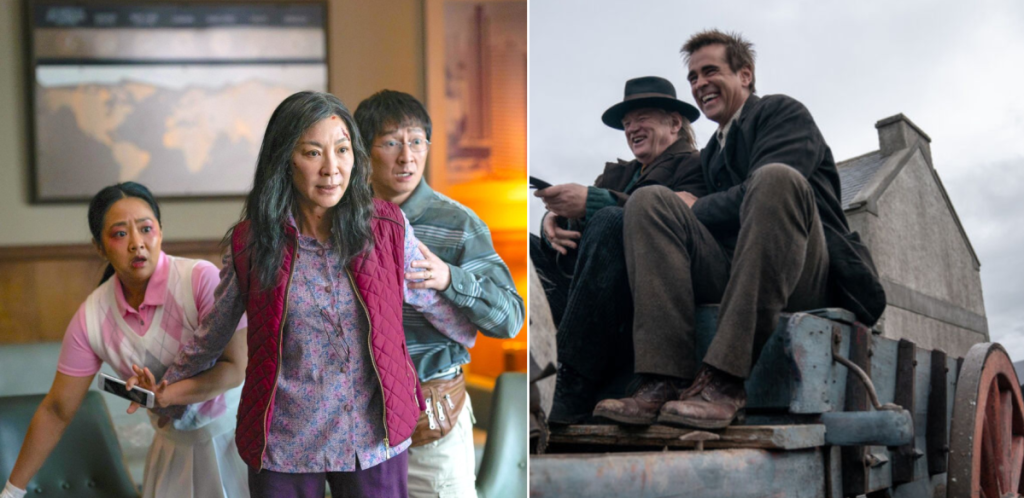
This weekend at the Oscars, we saw a complete sweep from A24’s blockbuster Everything, Everywhere, All at Once (EEAAO), taking home 7 awards including Best Picture, on top of the awards it already won at the Academy Awards, the SGA, the BAFTA, and so forth. It’s the most awarded movie in history.
A great movie, no question about it, and while I’m still reeling that my personal pick The Banshees of Inisherin won nothing, I came to realize that EEAAO did something very special for cinema. It was the perfect balance of trendsetting and trendfollowing. Risktaking and yet mainstream. Universal and diverse.
A topic that deserves a blogpost of its own, but for now, in relation to your screenplay, your story, and your dreams for your works, there’s a blueprint to be found here.
If we already know these producers and publishers are searching for what’s successful, what’s proven, like I mention in another article when asking for comparable titles, what they’re really looking for is trends.
If you’re working on a classic “whodunit” mystery novel, the conventions for what’s successful is found straight out of Agatha Christie. So read Agatha Christie. Figure out what made readers want to find out who really did it?
Yet publishers will ask what sets yours apart from these other whodunits? What makes it unique and voicey? You may want to be like Agatha Christie, but you are not Agatha Christie. You’re you. No one else can tell your story.
Finding that balance is one of the hardest things to do in writing. It’s like trying to look to the left and right at the same time. Though, like stated above, when faced with challenges, rise to them.
EEAAO took risks with at every phase of the filmmaking process, and it reaped the rewards.
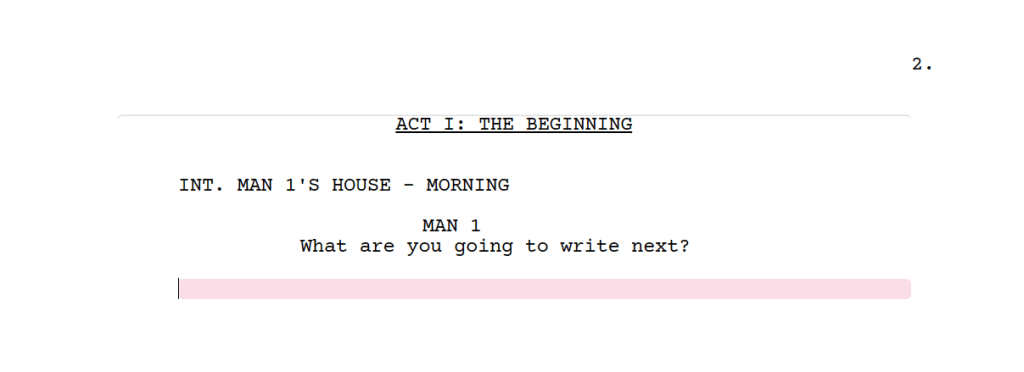
So how do we strengthen our screenplay? Here are, what I believe to be, a few helpful pointers:
- Develop your characters: Characters are the spine of story, after all what is Indiana Jones without Indiana Jones? What is Stranger Things without Eleven, Mike, Lucas, Dustin, and Will? Strong lead characters with strong personalities can separate the mediocre screenplays from the great ones. Make sure your characters have depth and complexity, and that their motivations and actions are believable.
- Focus on structure: A well-structured screenplay will keep the audience engaged and interested in the story. See my blog for act structure in storytelling. Ensure that your screenplay has a clear beginning, middle, and end, with well-defined plot points and strong character arcs.
- Keep it visual: Film & TV are visual mediums, so use images and actions to tell your story, rather than relying too heavily on dialogue. Show don’t tell. Imagine if in Avatar and Avatar: The Way of Water they just talked the whole movie instead of letting the audience become immersed by the Oscar-winning VFX.
- Trim unnecessary scenes: Be succinct. Every scene and character in your screenplay should serve a purpose. Cut out anything that doesn’t move the story forward or develop the characters. Eliminate fluff. A screenplay for a film should generally be 110-page range, pushing 150 if it’s fantasy or sci-fi.
- Create tension and conflict: Conflict and tension create drama, which is essential to keeping the audience engaged. Make sure there are obstacles for the characters to overcome and that there is a clear sense of stakes. Remember, there’s multiple kinds of conflict: Man vs nature, man vs technology, man vs society, man vs man, man vs himself.
- Don’t put emotions in dialogue, please: Instead of explicitly stating how a character feels, try to show it through their actions instead. Try to picture Adam Driver in Marriage Story repeated saying, “I’m sad”, “This makes me depressed”, “I’m feeling unhappy”. These are actors, they should be able to wear these emotions on their face, express without the need for words. Even dialogue-driven films know this rule. There’s a reason Harrison Ford made Han Solo say “I know” instead of Lucas’ original “I love you too” to Leia in SW: Empire Strikes Back.
- Get it reviewed: Feedback from others can help identify weaknesses and areas that need improvement. There are ample resources between writing groups or workshops, beta readers, have a read-aloud with actors, or even asking trusted friends and colleagues to read your screenplay and provide feedback.
- Edit and revise: Storytelling is a fluid process, as stated earlier, and the first draft is rarely perfect. Edit and revise your screenplay until it’s as polished and well-crafted as possible. Take it to a script doctor.
- Read other scripts: This is a legitimate tip I get from the producers I’ve talked with. The filmmaking industry is as transparent as ever. Screenplays are widely available on the internet these days as opposed to in the past, so make use of these resources.
If you’re a novelist hoping to make your book into a movie, understand that the transition from novel writing to scriptwriting is no easy feat. I would know, I’ve written both.
What helps me in my writing is to keep in mind that books are for general audiences, whereas scripts are skeletons, they’re outlines and blueprints, and they’re generally only meant to be read or consumed by people in the industry.
There is no right or wrong screenplay, but the stronger your writing is, the better shot you have.
 Donovan Levine | Agent, Writer, Copyeditor
Leave a comment